By Jim Hartley
For the past 13 years of my life, I’ve made my living selling fish so fresh it practically flopped off the ice. Here in Scarborough, where the sea is never more than a few minutes away, my staff and I have built a reputation on selling lobster, fish, clams and scallops so sweet they don’t need butter. So when customers asked me if I carried tinned fish, I thought they’d lost their marbles.
Tinned fish? Like the dusty sardine cans gathering cobwebs at the back of a general store? Why would you want what I equivocated to WWII era rations while you’re surrounded with a shop full of fresh seafood? But then they started showing me pictures—beautifully designed tins from Spain, Portugal, and even right here in New England. There were anchovies in lemon oil, smoked mussels in paprika, and salmon belly packed with dill and garlic. These weren’t my mom’s emergency rations (Shirley was a prepper before it was popular). These were gourmet experiences sealed in tin!
As it turns out, tinned fish has become the darling of foodies, influencers, and sustainability-minded eaters alike. It’s trendy enough to have its own hashtag—#tinnedfishdatenight—and practical enough to last on your pantry shelf for years. Social media is overflowing with videos of people artfully arranging sardines on sourdough or building charcuterie boards featuring smoked trout, olives, and pickled onions. The humble sardine tin has become a symbol of culinary sophistication.
And honestly? I can see why. The more I learned, the more I realized how much sense this craze makes. Canning locks in freshness right after the catch, preserving flavor and nutrients without the waste that comes from spoiled fish. It’s also sustainable—many of the fish used for tins, like sardines and mackerel, are small, fast-reproducing species that are caught with low-impact methods. Add in the convenience factor, and you’ve got seafood that’s good for both your taste buds and the planet.
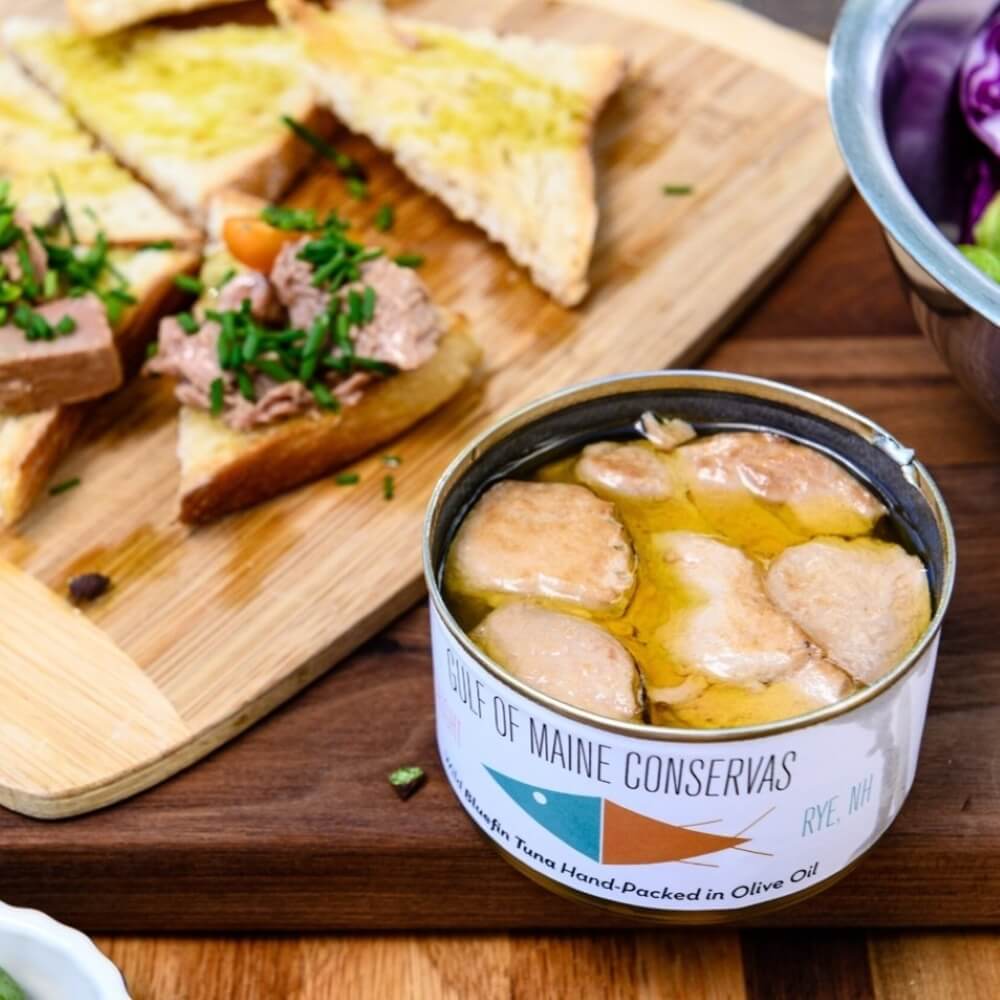
Of course, I had to try it myself. The first tin I opened was local—local bluefin tuna from Gulf of Maine Conservas, which I paired with toast points and a squeeze of lemon and, well, let’s just say I understood the hype. Our plan this winter is to continue to build the best display of artisanal tinned fish in Southern Maine at our market. Tourists love them, locals are getting curious, and even a few old lobstermen have picked some up “for emergencies”—though I suspect they’re eating them for breakfast.
So yes, I’m a convert. Tinned fish has swum its way from pantry filler to culinary star, and I couldn’t be happier to stock it. Who knew the future of Maine seafood would come with a pop-top lid? Enjoy, and eat slow.

Jim Hartley is a Scarborough resident and owner of Pine Tree Seafood and Dunstan Smokehouse.
Photos by Amanda Huebner Photography