By Toby Brissett
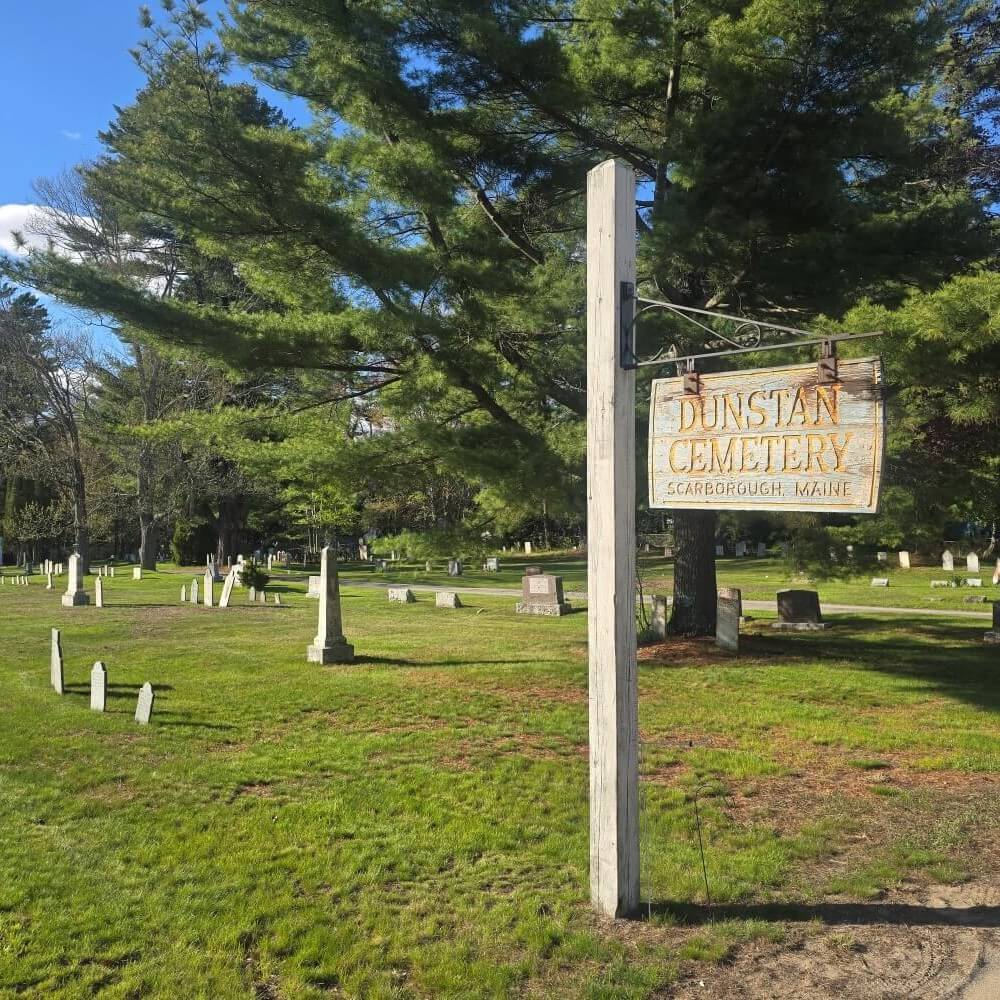
Dunstan Cemetery feels, in many ways, like an introduction to Scarborough itself; larger than it first appears and filled with names that begin early and continue steadily forward through the town’s history. Officially established circa 1889, its story dates back earlier. Historical records describe the site as a “public burying yard” by the 1870s, with town reports noting surveying, fencing, and the sale of burial lots bringing structure to what had already long been in use.
That makes it less a cemetery with one neat beginning than a place that gradually became official. Before public cemeteries were common, families often buried their loved ones near meetinghouses or in small private plots close to home. As Scarborough grew, some of its earliest burials were in the Dunstan Cemetery area, explaining why so many headstones date before its official establishment. The cemetery holds those laid to rest after it was established, as well as some of the town’s earlier burials that were relocated to one place.

Walking through it today, the sound of Route 1 fades as you move into the rows, where it is gladly replaced by birds and breezes sighing in the tall trees framing the grounds. There are open, sunlit stretches and quieter corners where the air feels still. In some plots, stones and trees have grown together over time, as if they belong to one continuous saga rather than separate timelines.
That same spirit of remembrance appears each Memorial Day, when volunteers, including members of local veterans’ groups such as American Legion Post 76, place American flags at veterans’ graves throughout Scarborough, including at Dunstan Cemetery. By late May, the grounds take on a different kind of presence, each flag marking a life of service within the larger landscape of the town.
Wander the rows, as I did, and a few names and details begin to stand out, not because they are grand and elaborate markers, but because they are subtle, quiet anchors to the town’s long history. You can see where Hiram Berry rests, a Civil War soldier in the 12th Maine Infantry. He served almost five years and returned, where he married and raised ten children here in Scarborough. The name Pillsbury appears often enough to feel familiar, not in the way of a single prominent figure, but as a steady presence. Naturally, this piqued my curiosity, and it was a fast lesson in how families, rather than individuals, shaped Scarborough across generations.
Of course, there are the stones themselves, dating to before the cemetery was established. Some are attributed to the Portland stone carver, Bartlett Adams; they are recognizable for their crisp lettering and symbolic carvings, often winged faces or stylized motifs that have endured long after the names have softened with time.
Dunstan Cemetery also holds some of Scarborough’s less familiar or visible history. A small section of the grounds includes the final resting place of individuals connected to the former Scarborough Town Farm (Alms House), where residents lived and worked in the 19th century when they had nowhere else to go. Earlier this spring, a small monument was installed to mark that area.
Dunstan Cemetery reflects Scarborough in a way few places can. For the novice taphophile,* or anyone curious about the town’s past, it is a quiet, timeless place to begin. Spend a little time there, and the stories begin to take shape. It becomes less a collection of monuments and markers, and more a record of the many remarkable people who built the busy, flourishing place we now call home.
*Taphophile – A person who has a passion for and interest in cemeteries, funerals, and gravestones.
Toby Brissett is a Scarborough resident and freelance writer with over 30 years of experience. Learn more at WordsAndIdeas.com.