By Toby Bartlett
Looking for a little art, a little ocean air, and a big helping of Maine history? Summer is the perfect time to take a short trip to Prouts Neck and visit the former studio of one of America’s most iconic painters. Winslow Homer may have preferred solitude, but the view he left behind is worth the quiet journey.
Perched on a wind-battered bluff, the modest little structure gazes out at the Atlantic like it’s trying to win a staring contest with the sea. This is Homer’s studio, though “studio” might be stretching it for a humble building built for sea air, solitude, and just enough room for the painter and his canvases.
Homer moved in back in 1884, long before Scarborough had traffic lights or lobster rolls for sale in a dozen places. He was already famous for his Civil War illustrations and watercolors, but by then he had enough of New York and its exhausting swirl of people, parties, and polite small talk. He wanted isolation, inspiration, and maybe the occasional gull for company. He found all of that, and then some, on Prouts Neck. “The life that I have chosen gives me my full hours of enjoyment…” he wrote to his brother in 1895. “The sun will not rise, or set, without my notice, and thanks.”
Then: The Hermit at the Edge of the World
It wasn’t just the view Homer fell for. It was the emptiness. The glorious, echoing, people-free quiet of it. He set up shop in his father’s old carriage house and enlisted an architect friend for a few upgrades, including moving the house 100 feet farther from the neighbors. He added a second-floor porch (his “piazza”) that practically hovered over the rocks so he could paint with the surf crashing at his feet.
In case anyone got ideas about dropping by, he left a hand-painted sign along the paths to his sketching grounds that read, “Snakes! Snakes! Mice!” It was part joke and part polite warning. As his nephew Charles later told Norman Rockwell, it was meant in humor. Still, at least one local remembered being shooed away by “vehemently shouted imprecations.”
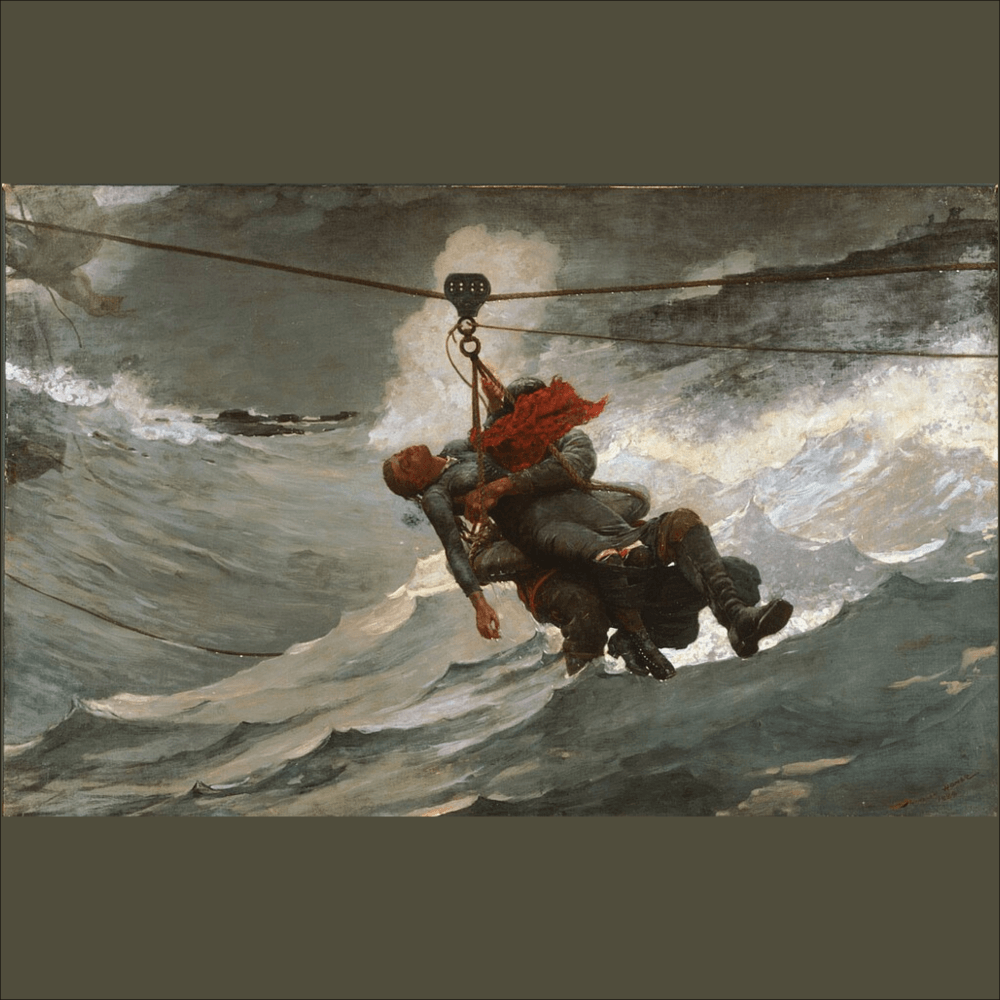
From this wave-battered perch, Homer created some of the most iconic images in American art: The Life Line, Weatherbeaten, Eight Bells. These weren’t just scenes of the sea. They were studies in movement and mood, in light that slips through fog and waves that vanish before they’re caught. Homer had an uncanny ability to paint the shimmer of wet rocks, the weight of gray clouds, and the quiet drama of tide meeting shore. He didn’t just observe the ocean. He translated its mystery.
Now: The Studio That Stayed Put
Today, the Winslow Homer Studio is preserved by the Portland Museum of Art. But don’t expect to swing by and poke your head in. Homer may be gone, but his “quiet, please” spirit lingers. The museum offers small-group shuttle tours from Portland, guiding visitors into the space where the magic, and probably a fair amount of muttering, happened.
Inside, everything has been restored to how it looked in 1910, right down to the easel near the window where Homer spent hours. There are no audio guides or touchscreen displays. Just weathered floors, soft light, and the constant pulse of the sea.
Why It Still Matters
Each summer, visitors flood Scarborough’s sandy beaches, calm, sunny, and postcard-ready. But Homer wasn’t drawn to the gentle shoreline. He turned his gaze toward the craggy edges, the sharp rocks, and the swells that crash with no apology. His paintings capture the part of the coast many overlook, the raw, exposed truth of it.
Then and now, the studio at Prouts Neck offers more than a glimpse into an artist’s life. It offers a reminder that sometimes, to see clearly, you have to step away from the crowd, walk past the beach, and let the tide do most of the talking.
For more information and to schedule a visit, go to PortlandMuseum.org/Homer.
Toby Bartlett is a Scarborough resident and freelance writer with over 30 years of experience. Learn more at WordsAndIdeas.com.
Image: Winslow Homer. The Life Line. 1884, oil on canvas (114 cm by 73 cm). Philadelphia Museum of Art, Philadelphia.