By Nick Lund, Maine Audubon
Autumn is easy to see in the forest: deciduous leaves turn yellow, then red, then brown, and then fall to the ground. Acorns and other nuts and seeds, the end result of flowers pollinated in spring and summer, fall to the ground and await the coming winter. The autumn forest is busy with plants and animals preparing for the coming cold.
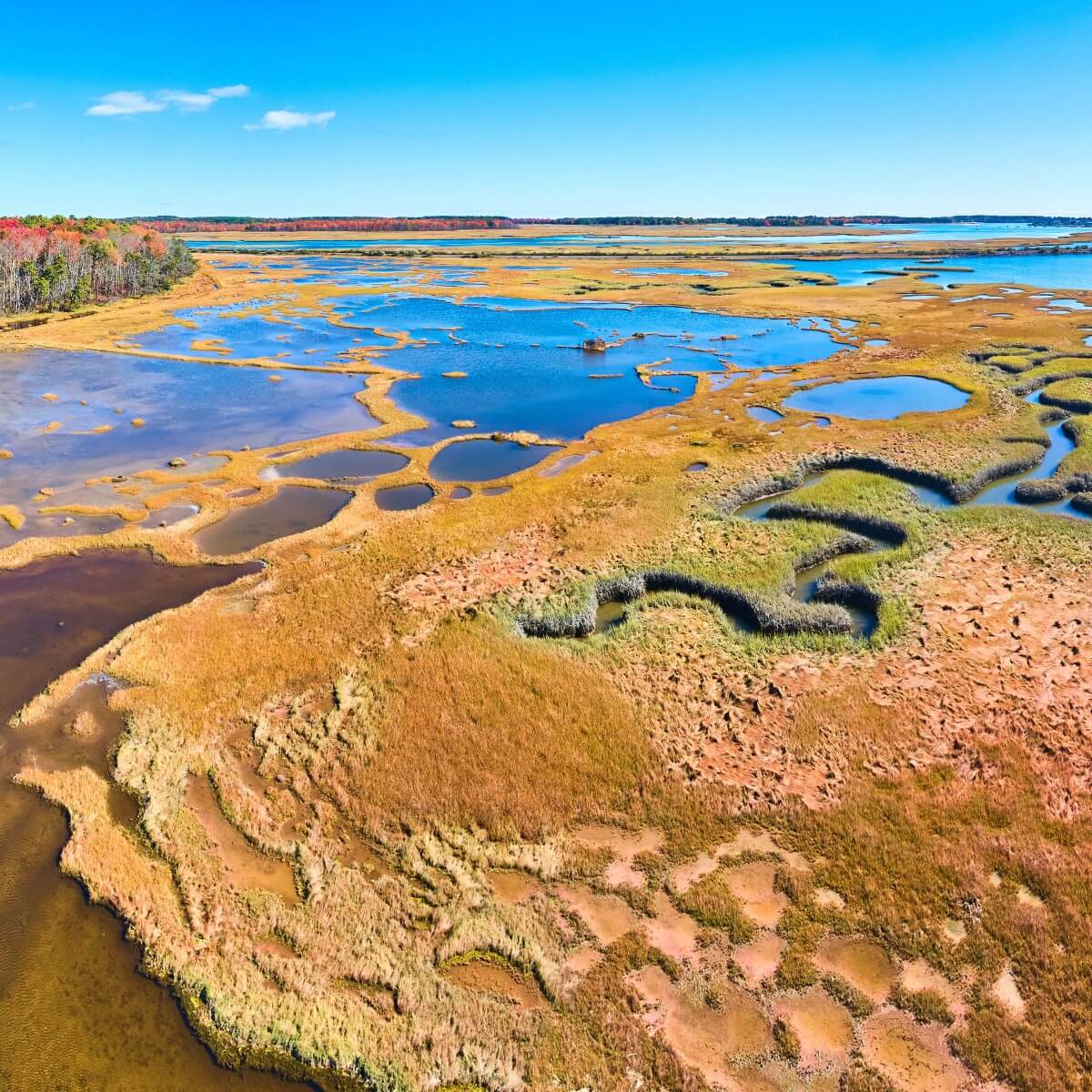
But what about the salt marsh? Though it may not be as obvious as in the forest, the denizens of Scarborough Marsh are also hard at work right now in preparation for winter.
The most visible vegetation in the Scarborough Marsh is Smooth Cordgrass, Sporobolus alterniflorus. It produces small yellow-green flowers in the fall that are pollinated by the winds blowing across the marsh. As the cordgrass stalks fade from green to brown in November, the seeds are thrown by the wind or moved by the tides to areas where they can grow again in spring.

Other marsh plants may produce colors to satisfy any “leaf peeper.” Scarborough Marsh hosts several species of glasswort (Salicornia spp.), a type of salt-loving succulent. They’re bright green through the spring and summer but turn a vibrant red in the fall. A number of marsh plants add color by flowering in late summer and early fall, including the purple flowers of Sea Lavender (Limonium nashi) and Purple-stemmed Aster (Symphyotrichum puniceum), pink from the rare Saltmarsh False-foxglove (Agalinis maritima), and bright yellow from Seaside Goldenrod (Solidago sempervirens).
The stalks of the cordgrass and other marsh plants begin to die off as fall progresses, but the vegetation plays a vital part of the nutrient cycle. As the stalks break off and are moved around by tides and ice, they build new organic layers of soil on the marsh surface, and provide food and shelter for wildlife in the spring.
The fall is a busy season for marsh wildlife. Thousands of birds—egrets, herons, sandpipers, yellowlegs, dowitchers, teal, wigeon, Mallards, Canada Geese, and more—stop to feed and rest in the pannes before continuing their migratory journeys south. A few resident mammals, like the Meadow Jumping Mouse, take to burrows in early fall and hibernate through the winter. Many more, including American Mink, Meadow Vole, and Northern Short-tailed Shrew, remain active all year around, often moving under the cover of snow and dead vegetation.
Fish also move in fall. One of the most common fish in Scarborough Marsh is the Mummichog (Fundulus heteroclitus). As the fish feel the water cooling, they make their way to upstream tidal pools and bury themselves in the mud to ride out the winter. Other marsh insects, bivalves, and crustaceans take a similar approach. The larger fish that may be found in marsh tributaries in the summer typically move to deeper or warmer waters.
In short, don’t overlook Scarborough Marsh in the fall! You’ll find all the color and activity of the forest but with a whole new cast of wildlife.
Scarborough Marsh Audubon Center
92 Pine Point Road | 207-883-5100