By Andrew Mackie, Scarborough Land Trust
Photo: Spotted Salamanders are one of the many species of amphibians that breed in Scarborough’s vernal pools every spring.
Vernal Pools: Temporary Waters of Life
Scattered throughout the forests of Scarborough are small, temporary pools of water filled in the spring from snow melt and rain. These flooded depressions are a unique type of wetland often called “vernal pools” because by mid-summer most dry up, blending into the forest floor.
As isolated wetlands, vernal pools lack fish, greatly reducing predation on the eggs of frogs and salamanders. Several species of amphibians have adapted to only breed in vernal pools, therefore they are called “obligate” vernal pools species. In Southern Maine, these species include wood frogs and yellow-spotted and blue-spotted salamanders. Other species, such as northern spring peeper, gray treefrog, American toad, four-toed salamander, red-spotted newt, and spotted turtle use vernal pools in addition to other wetland types. Some pools are home to a freshwater crustacean, fairy shrimp.
Frogs and salamanders breeding in vernal pools need to lay their eggs early so the eggs can hatch and the tadpoles can develop and leave the pool before the water evaporates in summer. This process starts as early as mid-March, dependent on the air temperatures reaching 50°F. Preferred breeding nights reach the desired temperature and usually involve rain, helping keep the amphibians moist as they make the journey from the surrounding forest to the pool. Breeding continues into April, tapering off by the end of the month. Since most of the frogs and salamanders breeding in these pools spend most of their time in the surrounding forest, protecting the pool itself is only part of what is needed. The forest containing the vernal pool is critical in the long-term conservation of these species.
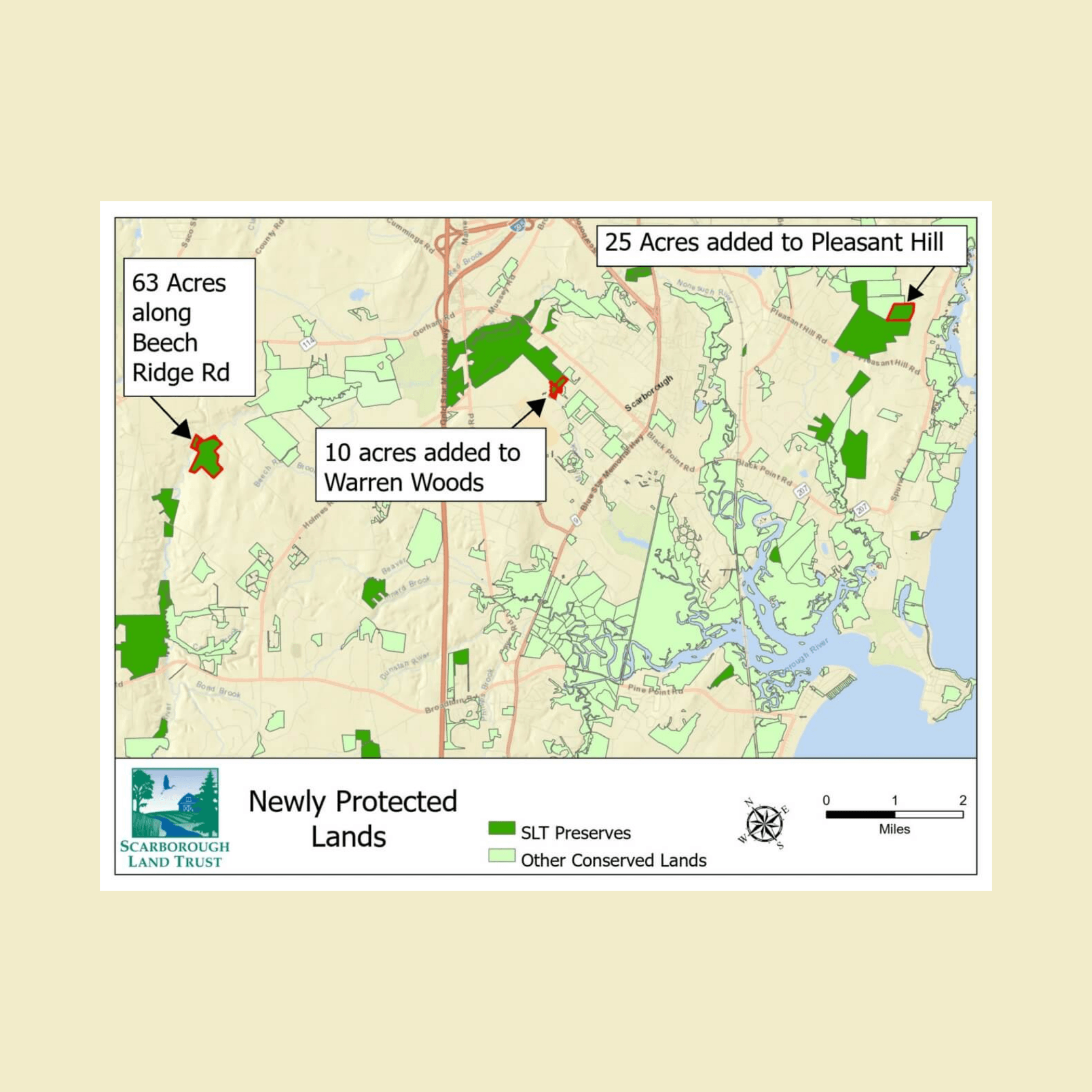
You can find vernal pools at several of Scarborough Land Trust’s preserves, including Fuller Farm, Broadturn Farm, Warren Woods, and Libby River. It is best not to enter the pools to avoid disrupting amphibian breeding and spreading an introduced fungus, Chytrid. This skin disease of frogs and salamanders is often deadly and has devasted amphibian populations around the world.
Annual Spring Clean Up
Saturday May 2, 2026, 9 am-12 pm

Land Trust Day is an annual, family-friendly volunteer event at SLT properties across Scarborough. It is a wonderful chance to meet your neighbors and help SLT prepare for the summer season. This year, activities will be held at Sewell Woods, Pleasant Hill, Libby River, Broadturn Farm, Fuller Farm, Warren Woods, and Blue Point. Activities include collecting litter, building bog bridges, spreading woodchips on trails, and cutting invasive plant. Click here to register. For more information, email Sami Wolf at swolf@scarboroughlandtrust.org.
Turn Over a New Leaf
Looking for a meaningful way to give back? Join SLT and help protect the special places that make our community thrive. We’re seeking enthusiastic volunteers for a variety of roles. Whether you love the outdoors, event planning, fundraising, or simply making a difference, we’ll help you find the right fit. Contact Andrew Mackie at amackie@scarboroughlandtrust.org or call 207-289-1199 to learn more.
Upcoming Free Events
Maine Big Night: Amphibian Migration Monitoring (cohosted with Scarborough Garden Club) | Thursday, April 16
SLT Annual Spring Clean Up (details above) | Saturday, May 2
Bird Walks | Saturday, May 9; Tuesday, May 12; Saturday, May 16
More details and registration at ScarboroughLandTrust.org/Events.