By Andrew Mackie, Scarborough Land Trust
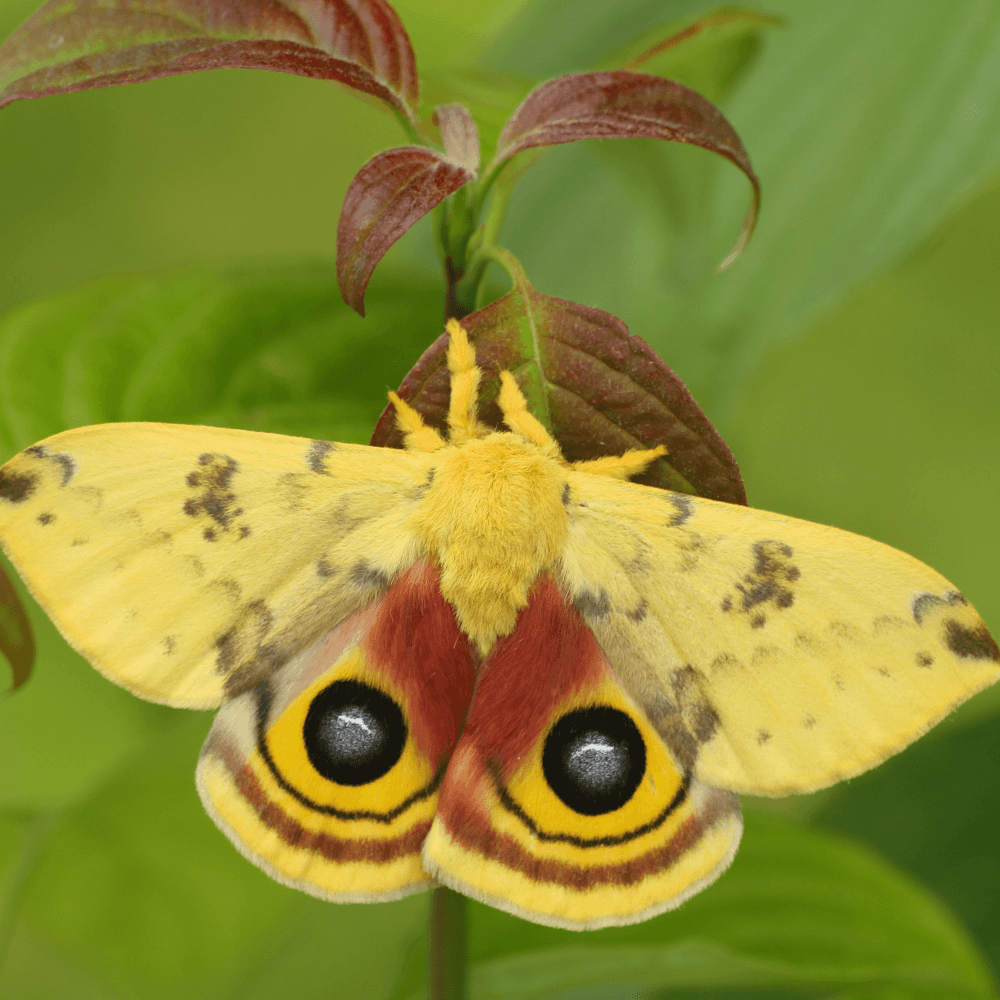
Photo: The io moth’s wings have “eyespots” that are a defense mechanism to distract or intimidate predators.
The warmer weather brings out a host of winged butterflies and moths during both day and night. Maine has 120 to 125 species of butterflies, depending upon who you ask. Compare that to the number of moth species in the state. Considering new species of moths are still being discovered, experts put the number at around 4,000. Together biologists call butterflies and moths – Lepidoptera.
Moths have several differences from butterflies. Typically, moths have feathery or tapered antennae as opposed to butterflies, which have a knob or club-like appearance. Moths, while at rest, tend to hold their wings flat, butterflies typically hold their wings vertically. A major difference for many species of moths is that they are most active at night and most butterflies are active during the day. These characteristics are good generalizations, but exceptions do occur.
With possibly 4,000 moth species in Maine, size, color, and shape vary greatly. There are brightly colored moths, drab looking moths, and others that are disguised as bird droppings, twigs, and other items found in nature.


Hickory Tussock Moth caterpillar, Hickory Tussock Moth adult, White-lined Sphinx Moth (“hummingbird moth”). Photos courtesy of Scarborough Land Trust.
One common feature among Lepidoptera is the larval stage are called a caterpillar. Lepidoptera caterpillars often feed on specific plants, for example the hickory tussock moth caterpillar prefers to feed on the leaves of hickory, walnut, pecan, or butternut, although other tree species are possible. With so many moth and butterfly caterpillars feeding on trees and shrubs, they are a treasure trove of protein exactly at the time songbirds are nesting and feeding their young. Young birds grow quickly on these high protein packets of energy.
On a warm summer evening, check out the diversity of moths attracted to your outside lights. They are amazing creatures and important food for birds, bats, other small mammals, frogs, and predatory insects.
Save the Date
Scarborough Land Trust is excited to announce a new event this year. Working in partnership with various organizations and agencies, we are hosting Scarborough Marsh Day on Saturday, August 15. The day will be filled with various walks, programs, workshops, and activities all related to the Marsh. As we get closer to the event, more information will be posted on our website, ScarboroughLandTrust.org.
Upcoming Free Events
Uncover the Hidden Critters of Silver Brook | June 11, 3:00pm (hands-on, ideal for families)
Firefly Walk | Pleasant Hill Preserve, June 23, 8:30pm
Explore the Nocturnal World of Fuller Farm | July 15, 8:30pm
Broadturn Farm Bash | August 27, 6:00pm
More details and registration at ScarboroughLandTrust.org/Events.