By the Scott and Sunny Townsend Team
Today, the waters off Higgins Beach are mostly dotted with sailboats, kayaks, and other recreational craft, but the shoreline still carries reminders of a time when hardworking schooners regularly passed along the Maine coast. Until the early 1900s, these ships hauled coal, lumber, and supplies between East Coast ports. Fog, rocky ledges, and sudden storms could quickly make a routine trip dangerous.

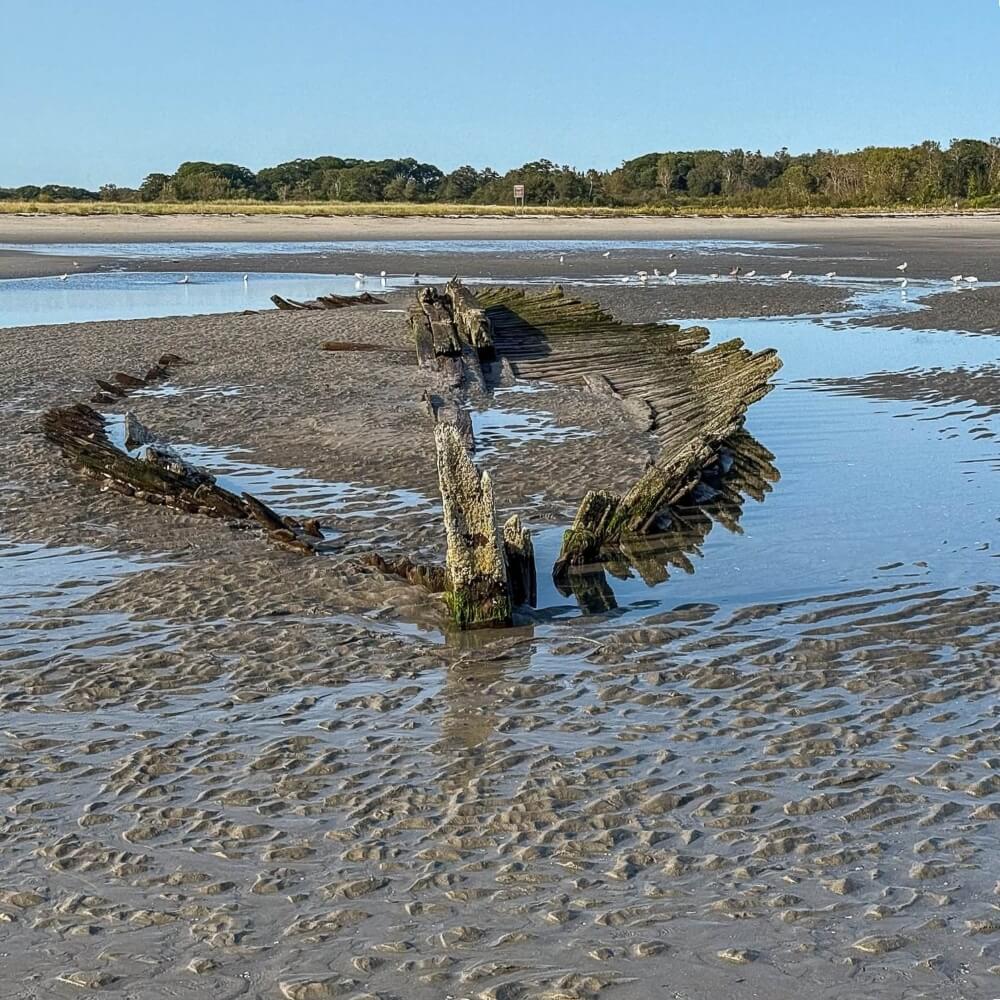
One of the most famous local shipwrecks is the schooner Howard W. Middleton, still visible at Higgins Beach (pictured above). On August 10, 1897, the vessel was approaching Portland after a slow journey from Philadelphia that had been delayed by poor winds. Dense fog covered the coastline, making it nearly impossible to see. The captain decided to anchor near Richmond Island to wait for better conditions. Without realizing it, though, the schooner drifted off course and moved dangerously close to Higgins Beach.

Instead of reaching safe anchorage, the Middleton struck ledges near the mouth of the Spurwink River. The impact badly damaged the hull, and the ship could not be saved. Fortunately, the crew escaped unharmed. Salvage crews later recovered some equipment and cargo, while local residents gathered pieces of coal that washed ashore. More than a century later, the wreck is still visible, especially after storms shift the sand. Every now and then, beachgoers even stumble across small chunks of coal mixed among the pebbles and seaweed.
A second wreck, though less well known, also rests near Higgins Beach. It is occasionally visible near Shipwreck Road and Kent Street, close to the dunes.
For curious beachgoers walking the shore, spotting a weathered timber from one of these old wrecks or finding a lump of coal can feel a little like discovering a hidden piece of Higgins Beach history.
Many thanks to Scott and Sunny Townsend for keeping Scarborough Living readers up to date on the happenings at Higgins Beach.