By Nick Lund, Maine Audubon
Route 1 isn’t the only place to find commuters in Scarborough. Every morning and evening in the summer, large wading birds like herons and egrets can be seen flying over town making the journey between their daytime and nighttime haunts.
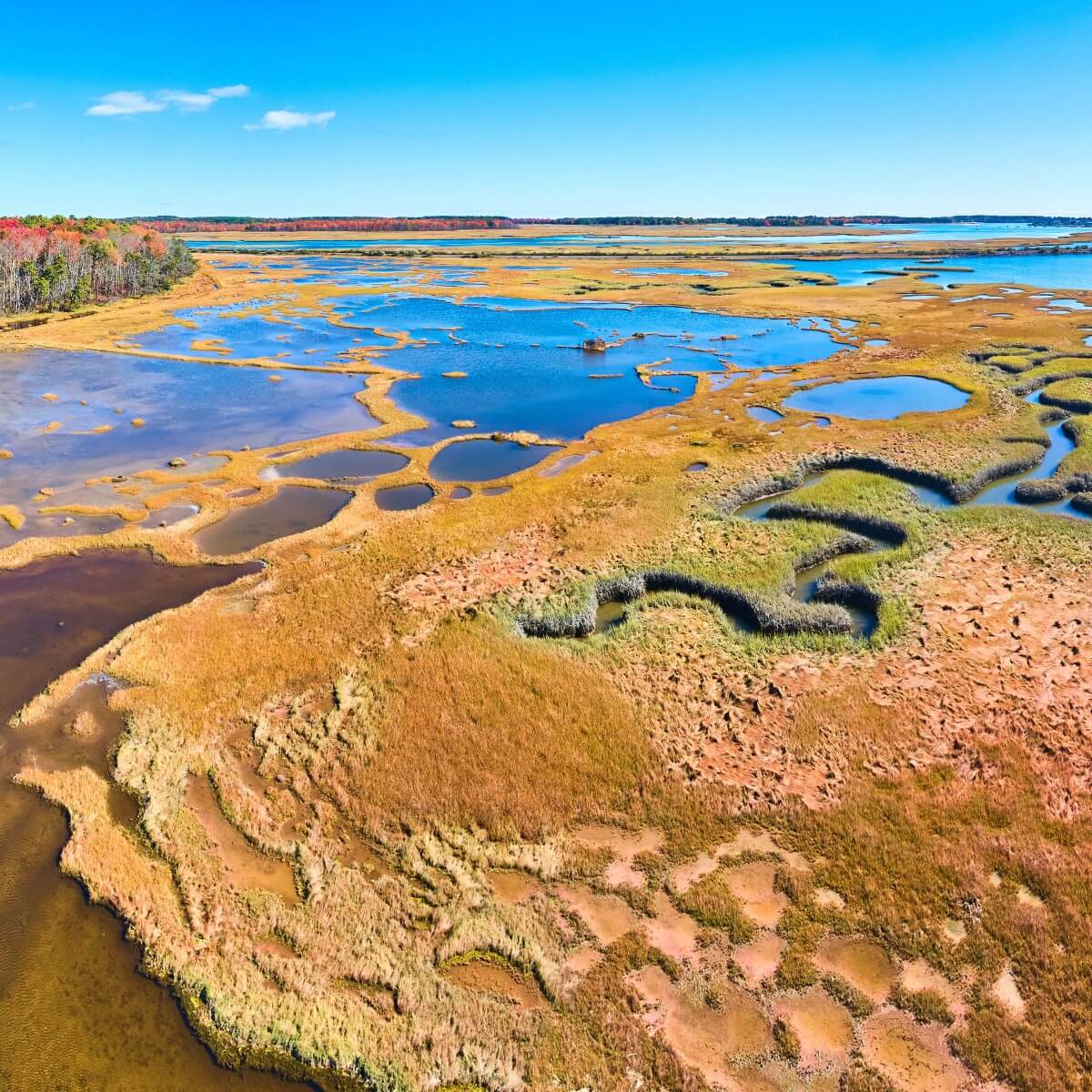
Many of these birds–Great Blue Herons, Snowy Egrets, Great Egrets, Glossy Ibises–clock in for the day shift at Scarborough Marsh. Food is the major order of business, and wading birds find all the fish, crustaceans, and other prey they need in the marsh’s shallow pools, exposed mud flats, and tidal creeks. Wading birds spend all day at the marsh feeding, and being viewed by thousands of visitors.

When the sun sets, however, Scarborough Marsh’s famous wading birds pack up and head home, and that means making the short flight out to sea to Stratton Island. Located smack in the middle of Saco Bay, Stratton Island is the largest of a cluster of three islands that also includes Little Stratton and Bluff Islands. Together, Stratton and Bluff Islands make up the Phineas W. Sprague Memorial Sanctuary, owned and managed by the National Audubon Society’s Seabird Institute.
Right now, in winter, the island is pretty empty, but come spring Stratton’s 24 acres provide lots of different bird habitats. Tall trees in the center of the island are ideal for the large, heavy nests of Great Blue Herons and Great Egrets. A large freshwater pond in the center of the island is an ideal refuge for baby ducks like Green-winged Teal and Common Eiders. The rocky shore hosts shorebirds, gulls and terns, cormorants, and alcids like Black Guillemot.
But why do these herons and egrets bother to make the commute? There are certainly large trees on the mainland, but the reason is safety. Herons and egrets nest communally, in groups called rookeries. These busy neighborhoods, with their concentrations of baby birds and eggs, can attract predators. But not on an island. The foxes, coyotes, dogs, and other predators that may threaten wading birds and their nests aren’t found on Stratton. It’s a true sanctuary, like home should be.
Stratton Island is a refuge for more than just herons and egrets, though. Like many mammal-free islands, Stratton hosts seabirds looking to nest safely while remaining close to the fish they eat. Several species of tern, the small, slender relatives of gulls, nest on the island, including the federally endangered Roseate Tern and the Maine state endangered Least Tern. Special care is needed to ensure that these protected species remain healthy, and so biologists from the Seabird Institute spend the entire summer breeding season on the island. Nests need to be protected mostly from foraging gulls, but the conservation is working. Hundreds of pairs of Common, Least, Arctic, and Roseate terns currently nest on the island.
Aside from the Audubon scientists, the relative lack of humans on the island is also attractive to nesting birds. Unlike Scarborough Marsh and other mainland birding hotspots, it’s not easy to visit Stratton Island. Visitation is often arranged as part of annual trips organized by Maine Audubon, the National Audubon Seabird Institute, York County Audubon, or other groups. Look for notices in the spring and early summer for these special trips.
Scarborough Marsh Audubon Center
92 Pine Point Road | 207-883-5100